
Choosing the right open-source eCommerce platform in 2026 is a foundational decision that will define your business’s potential for growth, scalability, and customization.
In this arena, two names stand as giants: Magento (now Adobe Commerce) and WooCommerce.
The Magento vs WooCommerce debate is a critical one for any serious entrepreneur, as it represents a choice between an enterprise-grade, feature-rich powerhouse and an incredibly flexible, user-friendly platform built on the world’s most popular CMS.
The stakes for this decision have never been higher.
The global eCommerce market continues its relentless expansion, with online retail sales projected to account for nearly 24% of all retail sales worldwide this year.
To capture a piece of this market, your platform must be powerful and reliable.
While WooCommerce is the most popular eCommerce platform overall, powering over 3.8 million stores, Magento (Adobe Commerce) is a dominant force in the enterprise space, trusted by major global brands.
This guide will provide an in-depth, feature-by-feature comparison to help you choose the right engine for your online store.
Key Takeaways
- The Core Difference: Understand the fundamental distinction: Magento is a powerful, feature-rich platform built for large, enterprise-level businesses with complex needs, while WooCommerce is a flexible, user-friendly plugin for WordPress, ideal for small to medium-sized businesses.
- Power vs. Accessibility: See why Magento’s robust, out-of-the-box features for multi-store management and international sales are unmatched, while WooCommerce’s integration with WordPress makes it more accessible and better for content-driven commerce.
- The True Cost of Selling: Discover why both platforms being “free” open-source software is misleading. We’ll compare the total cost of ownership, including the significant development and hosting costs for Magento versus the more moderate expenses for WooCommerce.
- Performance and Scalability: Learn why Magento is engineered for massive product catalogs and high-volume traffic from the ground up, while WooCommerce is highly scalable but requires more hands-on optimization and premium hosting to reach an enterprise level.
- A Platform for Every Ambition: Get a clear, scenario-based verdict to help you decide which platform is the ideal fit, whether you’re a startup, a mid-sized business ready to scale, or a large enterprise.
What is Magento (Adobe Commerce)?
Magento, now officially known as Adobe Commerce, is an open-source eCommerce platform renowned for its power, scalability, and extensive feature set.

It is an enterprise-level solution designed for large businesses and retailers with complex product catalogs, high traffic volumes, and a need for advanced functionalities like multi-store management and internationalization.
It offers unparalleled customization but requires significant technical expertise and development resources to manage effectively.
What is WooCommerce?
WooCommerce is a free, open-source eCommerce plugin designed exclusively for WordPress. It transforms any WordPress website into a fully functional and highly flexible online store.

Because it’s built on the world’s most popular CMS, WooCommerce is incredibly user-friendly and benefits from a vast ecosystem of themes and plugins.
It is the go-to choice for small to medium-sized businesses, bloggers, and entrepreneurs who want a powerful yet cost-effective and easy-to-manage eCommerce solution.
Quick Comparison Table: Magento vs WooCommerce
| Feature | Magento (Adobe Commerce) | WooCommerce |
| Primary Focus | Enterprise-Level, Scalable eCommerce | Flexible eCommerce for WordPress |
| Core Strength | Unmatched Power, Features & Scalability | Ease of Use, Flexibility & WordPress Integration |
| Ease of Use | Difficult (Requires developers) | Moderate (Easy for WordPress users) |
| Total Cost | Very High (Development & hosting are expensive) | Low to Moderate (More affordable hosting & plugins) |
| Out-of-the-Box Features | Excellent (Very feature-rich) | Good (Relies on extensions for advanced features) |
| SEO Capabilities | Excellent (Powerful built-in tools) | Excellent (with plugins like Yoast) |
| Performance | Excellent (Built for high performance) | Good (Performance depends heavily on hosting) |
| Security | Robust (but requires expert management) | User-Managed (Depends on hosting & practices) |
| Best For | Large enterprises, B2B, international brands | Small to medium businesses, bloggers, startups |
Pricing Comparison: WooCommerce vs Magento
WooCommerce Pricing
WooCommerce is an open-source WordPress plugin: the core plugin is free, meaning you don’t pay a license fee just to download and use it.
It gives basic eCommerce functionality out of the box (product listings, cart, checkout, etc.).
Where costs come in is via hosting, themes, premium plugins/add-ons, payment processor fees, and maintenance. All of which are available on their marketplace.
There are many free WooCommerce extensions: for example, “WooCommerce Shipping” (a free extension, no monthly fees) or free official payment gateways, or free plugins that handle tasks like PDF invoices or extra product options.
On the other hand, premium add-ons (e.g, advanced product add-ons, conditional logic, subscription support, custom fields,s etc.) typically require one-time or recurring payments.
Magento / Adobe Commerce Pricing
Magento has a “free” version too, Magento Open Source (formerly known as Magento Community edition), which you can install without paying for the software license.
However, there are also paid editions: Adobe Commerce (also known as Magento Commerce) and Adobe Commerce Cloud, which include advanced built-in features, performance optimisations, support, staging environments, etc.
Extensions/add-ons in Magento are also used to enhance features: things like improved search, layered navigation, customer support tools, etc.
Some are free; many are paid. Prices for add-ons/extensions typically range from USD $60 to $600 or more, depending on complexity.
Themes also have cost (free or premium, leading towards $499 or more, depending).
The paid Magento editions cost significantly more.
For example, Adobe Commerce price starts at around US$22,000/year for lower-GMV (“Gross Merchandise Value”) stores, scaling up depending on size, and the cloud version (Commerce Cloud) starts higher (e.g. $40,000/year) and increases with business size.
Magento vs WooCommerce: Detailed Comparison
1. Ease of Use for Beginners
Magento
Magento is a complex and powerful platform that is not suitable for beginners.
Its backend is intricate, and managing a Magento store requires a deep understanding of its architecture and often requires the help of a dedicated developer.
It is a professional tool designed for experienced teams.
WooCommerce
WooCommerce is significantly more user-friendly.
Because it operates within the familiar WordPress dashboard, anyone with basic WordPress experience can set up a simple store with relative ease.
The process of adding products and managing orders is intuitive and straightforward.
2. Performance and Scalability
Magento
Magento is built for performance at a massive scale.
Its architecture is designed to handle hundreds of thousands of products and huge volumes of traffic without slowing down, provided it is running on a properly configured, high-performance server.
It is the superior choice for enterprise-level scalability.
WooCommerce
WooCommerce is also highly scalable, but its performance is heavily dependent on the quality of your hosting and the number of plugins you use. A basic WooCommerce store on shared hosting will struggle with high traffic.
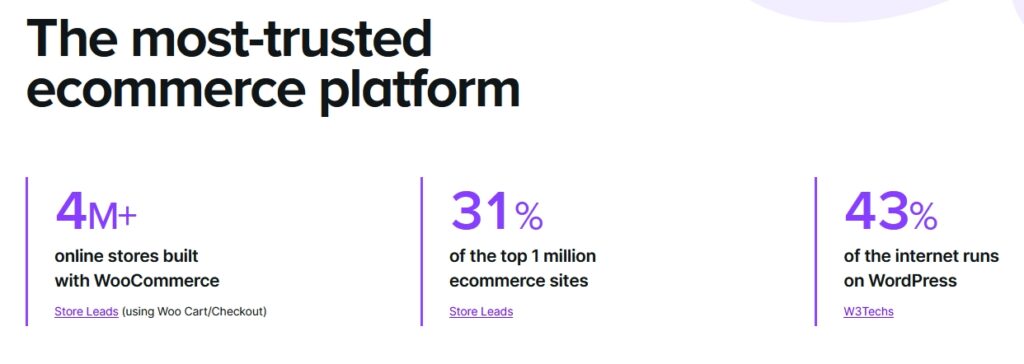
However, with premium managed hosting and careful optimization, WooCommerce can and does power very large, high-traffic stores.
3. Features and Extensions
Magento
Magento comes packed with an incredible array of advanced features right out of the box.
This includes multi-store management from a single dashboard, multi-language and currency support, advanced pricing rules, and sophisticated product management.
Its marketplace for extensions, Adobe Commerce Marketplace, offers high-quality but often expensive add-ons.
WooCommerce
WooCommerce provides a solid set of core features to get you started, but it relies heavily on its vast ecosystem of extensions (plugins) for advanced functionality.
You can add any feature you want, from subscriptions to bookings, by choosing from thousands of free and premium plugins in the WordPress repository.
4. Design and Customization
Magento
Magento offers powerful design capabilities with a theme-based system. However, customizing a Magento theme is a complex task that requires a skilled developer.
It is not a platform for easy, code-free design tweaks.
WooCommerce
WooCommerce, being part of the WordPress ecosystem, offers virtually unlimited design flexibility.
You can choose from thousands of WooCommerce-compatible themes and use a drag-and-drop page builder like Elementor to create a completely custom look without touching a line of code.
5. SEO Capabilities
Magento
Magento has a powerful suite of built-in SEO tools. It provides granular control over meta tags, URL structures, and other critical on-page elements.
It also has features specifically for large stores, like advanced canonical tag management, making it an SEO powerhouse out of the box.
WooCommerce
WooCommerce’s SEO capabilities are powered by WordPress and are excellent.
When combined with a leading SEO plugin like Yoast SEO or Rank Math, you gain an unparalleled level of control over your content and eCommerce SEO, making it one of the best platforms for organic growth.
Best Hosting Solutions
- Best High Speed Web Hosting by Hostinger
- Low Cost Web Hosting Solution for Everyone by NameCheap
- Next-Gen VPS Hosting Solutions by Liquid Web
- Exclusive Website hosting by Inmotion Hosting
Best Cloud Hosting Solutions
Start Your eCommerce Online Store
Shopify eCommerce Online Store Builder for just $1
Marketing Tools
SEO Tools
#1 All in One SEO Tool – Semrush
Which is Right for Your Business? A Scenario-Based Guide
Choose Magento if you are a…
- Large, Enterprise-Level Retailer: If you are a large, established brand with a massive product catalog, high sales volume, and a global presence, Magento’s power and scalability are built for you.
- B2B Business with Complex Needs: If you require complex pricing rules, customer-specific catalogs, and other advanced B2B functionalities, Magento is the superior choice.
- Company with a Dedicated Development Team: If you have an in-house team of experienced developers or a significant budget for an agency, you can leverage Magento’s full potential.
Choose WooCommerce if you are a…
- Small to Medium-Sized Business (SMB): If you are a startup, a small business, or a mid-sized company, WooCommerce provides a powerful, scalable, and cost-effective solution.
- Beginner or DIY Entrepreneur: If you are building your first online store and need a platform that is user-friendly and easy to manage, WooCommerce is the clear winner.
- Content-First Brand: If your business model relies heavily on blogging and content marketing to drive sales, the seamless integration of WooCommerce with WordPress is unbeatable.
More useful article for you:
👉PrestaShop vs WooCommerce in 2026: Ultimate Open-Source Showdown
👉 6 Best WooCommerce Hosting Providers in 2026 (Fast & Reliable Options)
👉 WooCommerce Shortcodes: Usage, Attributes, and Troubleshooting
👉 Top 7 Essential WooCommerce Security Tips to Keep Your Store Safe
Frequently Asked Questions (FAQ)
Is Magento really that much harder to use than WooCommerce?
Yes. The difference is significant. A non-technical user can learn to manage a WooCommerce store in a matter of days. Managing a Magento store effectively without prior experience is nearly impossible and typically requires hiring a specialized developer or agency.
Can WooCommerce handle a large number of products?
Yes, WooCommerce can handle hundreds of thousands of products, but it requires the right infrastructure. To run a large WooCommerce store, you will need to invest in a premium, managed hosting plan that is optimized for performance and scalability.
Which platform is more secure?
Both platforms are secure if managed properly. Magento is known for its robust security features, but as a self-hosted platform, you are responsible for applying security patches and maintaining a secure server environment. Similarly, WooCommerce’s security depends on your hosting, the plugins you use, and your own security practices.
Can I migrate from WooCommerce to Magento?
Yes, migration is possible, but it is a complex and expensive process. It requires a team of developers to migrate your data (products, customers, orders) and completely rebuild your website’s design on the Magento platform. This is typically only considered by businesses that have significantly outgrown the capabilities of their WooCommerce setup.
Conclusion: A Choice Between Enterprise Power and Accessible Flexibility
The Magento vs WooCommerce debate is not about which platform is better, but about which platform is the right size and fit for your business.
Choose Magento (Adobe Commerce) if you are a large, established enterprise that needs an incredibly powerful, feature-rich, and scalable platform, and you have the significant budget and technical resources to manage it.
Choose WooCommerce if you are a small to medium-sized business, a startup, or a content-driven brand that needs a flexible, user-friendly, and cost-effective solution that can grow with you.
By honestly assessing your budget, your technical capabilities, and your business’s scale, you can confidently choose the open-source platform that will serve as the best possible foundation for your eCommerce ambitions in 2026.