
The dream of launching a successful online store has never been more attainable. The global eCommerce market is a titan of modern commerce, projected to exceed a staggering $7.9 trillion in sales this year.
For aspiring entrepreneurs, the most fundamental decision is choosing how to sell products online.
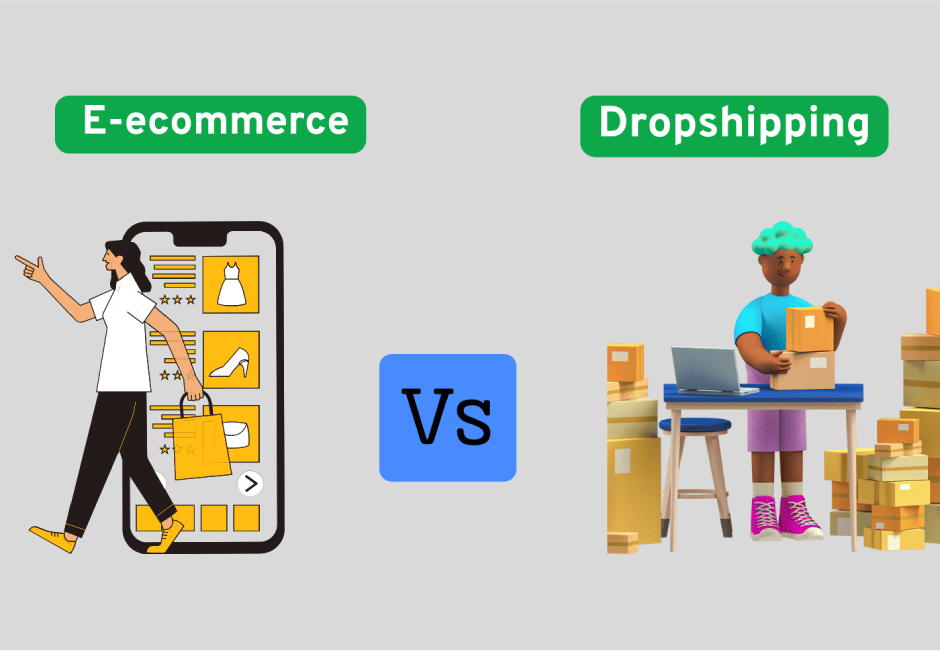
This brings us to a crucial crossroads: eCommerce vs Dropshipping.
While dropshipping is a type of eCommerce, the operational differences between the two models are vast and will define your startup costs, profit margins, and daily responsibilities.
Understanding this distinction is critical to building a sustainable business.
The global dropshipping market is booming, expected to grow by over 24% annually, reaching nearly $476 billion by 2026.

This explosive growth is driven by its low barrier to entry. However, traditional eCommerce, holding your own inventory, offers greater control and higher profit margins.
With over 80% of online shoppers stating that delivery speed and shipping costs are a top factor in their purchase decision, the model you choose for fulfillment is paramount.
This guide will provide a definitive breakdown of traditional eCommerce vs dropshipping, helping you choose the right path for your entrepreneurial journey in 2026.
Key Takeaways
- The Core Difference: Understand the fundamental distinction at a glance: traditional eCommerce involves buying and holding your own inventory, while dropshipping involves selling products that a third-party supplier ships directly to the customer.
- Startup Costs Compared: See why dropshipping offers an incredibly low financial barrier to entry, while traditional eCommerce requires a significant upfront investment in bulk inventory.
- The Profit Margin Trade-Off: Learn why traditional eCommerce typically yields much higher profit margins per sale, whereas dropshipping is a high-volume, low-margin game.
- Control vs. Convenience: Discover the critical trade-offs between the two models regarding brand control, customer experience, and shipping times.
- Which is Right for You?: Get a clear, scenario-based guide to help you decide which model best fits your budget, experience level, and business goals.
What is eCommerce?
eCommerce is the business model most people think of when they imagine an online store.
In this model, the business owner purchases products in bulk from a manufacturer or wholesaler, holds that inventory in a physical space (a warehouse, spare room, or third-party logistics center), and is personally responsible for packing and shipping each order to the customer.
You control the entire process from product sourcing to the final unboxing experience.
What is Dropshipping?
Dropshipping is a retail fulfillment method where a store doesn’t keep the products it sells in stock. When a store sells a product using the dropshipping model, it purchases the item from a third party, usually a wholesaler or manufacturer, who then ships the product directly to the customer.
The dropshipper never sees or handles the product.
Your primary job is marketing and customer service; you are the digital storefront, while a supplier handles the physical logistics.
Head-to-Head: The Key Differences Between eCommerce and Dropshipping
Let’s break down the critical differences across the most important aspects of running an online business.
1. Inventory Management and Risk
Traditional eCommerce:
You are fully responsible for the inventory. You must forecast demand, purchase stock in advance, and manage unsold products.
This carries a significant financial risk. If a product doesn’t sell, you are left with “dead stock” and a financial loss.
However, holding stock means you have immediate quality control and can ensure availability.
Dropshipping:
You hold zero inventory. This is the single biggest advantage of the model.
The financial risk is virtually eliminated, as you only purchase a product after a customer has already paid you for it.
The downside is that you have no control over the supplier’s stock levels.
Your supplier could run out of a popular product without warning, forcing you to cancel orders and damage your reputation.
2. Startup Costs and Investment
Traditional eCommerce:
The startup costs are high. The largest expense is purchasing your initial bulk inventory, which can easily run into thousands of dollars.
You also need to factor in costs for storage space and packing materials.
Dropshipping:
The startup costs are extremely low. Since you don’t buy inventory upfront, your main expenses are your Shopify subscription and marketing costs.
This low barrier to entry is why dropshipping is so popular, with an estimated 27% of online retailers having now adopted the model.
3. Profit Margins
Traditional eCommerce:
Profit margins are significantly higher. By purchasing products in bulk, you get a much lower cost-per-unit from the manufacturer (wholesale pricing).

This allows you to have a healthy markup on each sale, often in the 40-60% range, depending on the industry.
Dropshipping:
Profit margins are much lower. You are essentially buying products one at a time from your supplier, so you don’t get the benefit of wholesale pricing.
Margins in dropshipping are typically in the 15-30% range. It is a volume-based game; you need to sell a lot more units to make a significant profit.
Best Hosting Solutions
- Best High Speed Web Hosting by Hostinger
- Low Cost Web Hosting Solution for Everyone by NameCheap
- Next-Gen VPS Hosting Solutions by Liquid Web
- Exclusive Website hosting by Inmotion Hosting
Best Cloud Hosting Solutions
Start Your eCommerce Online Store
Shopify eCommerce Online Store Builder for just $1
Marketing Tools
SEO Tools
#1 All in One SEO Tool – Semrush
4. Shipping, Fulfillment, and Branding
Traditional eCommerce:
You have complete control over the customer experience.
You can use custom branded packaging, include thank-you notes or free samples, and ensure that products are shipped out quickly and reliably.
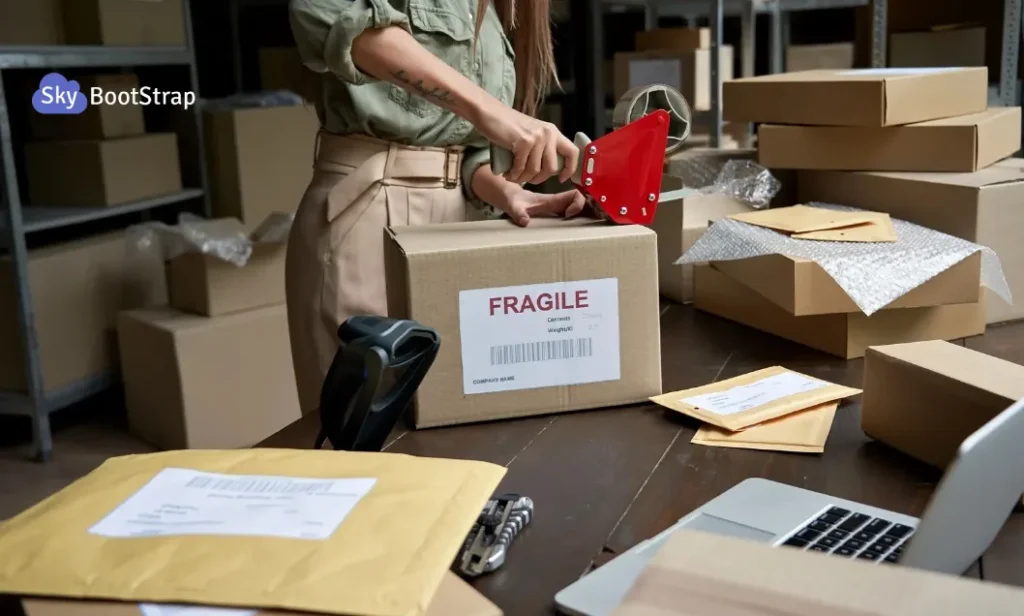
This control is crucial for building a premium brand.
Dropshipping:
You have very little control. The product is shipped directly from your supplier, often in a generic, unbranded box.
You are reliant on their shipping speed and packaging quality.
Long shipping times, especially from overseas suppliers, can be a major source of customer complaints and a significant drawback of the model.
5. Scalability and Business Complexity
Traditional eCommerce:
Scaling can be complex. As your order volume grows, you need more storage space, more staff to pack orders, and a more sophisticated inventory management system.
It requires significant capital and operational planning.
Dropshipping:
Scaling is logistically simpler. As order volume increases, you simply forward more orders to your supplier. The operational side doesn’t change much.
However, managing customer service for a high volume of orders with varying shipping times from multiple suppliers can become very complex.
Quick Comparison Table: eCommerce vs Dropshipping
| Feature | Traditional eCommerce | Dropshipping |
| Upfront Cost | High (must buy inventory) | Very Low (no inventory cost) |
| Profit Margins | High (40-60%) | Low (15-30%) |
| Inventory Risk | High (risk of unsold stock) | None |
| Brand Control | High (custom packaging, fast shipping) | Low (generic packaging, supplier-dependent) |
| Shipping & Fulfillment | You manage it directly | Supplier manages it |
| Product Quality Control | High (you inspect the products) | Low (you never see the product) |
| Business Complexity | Operationally complex to scale | Logistically simple to scale |
| Best for Beginners | More challenging | Much easier to start |
Which Business Model is Better For You?
The better model depends entirely on your budget, risk tolerance, and business goals.
You should choose Traditional eCommerce if:
- You have a unique product idea or want to create a custom, premium brand.
- You have the capital to invest in bulk inventory upfront.
- You want high profit margins and complete control over the customer experience.
- You have a plan for physical storage and fulfillment.
You should choose Dropshipping if:
- You are a beginner with a limited budget and want to learn about e-commerce with minimal financial risk.
- You want to offer a wide variety of products without investing in inventory.
- Your primary strengths are in marketing, SEO, and customer acquisition.
- You are willing to accept lower profit margins in exchange for convenience.
More useful article for you:
👉 How to Make a Website for Selling Products in 2026
👉 WordPress vs Squarespace vs Wix (2026): Which Website Builder Should You Choose?
👉 10 Tips to Choose a eCommerce Website Builder for Your Business
👉 Is Shopify Good for Small Online Business?
Frequently Asked Questions (FAQ)
Is dropshipping still profitable in 2025?
Yes, dropshipping is still profitable, but it is highly competitive. Success is no longer about finding a single “winning product.” It requires strong branding, excellent marketing skills, and a focus on providing great customer service to stand out. The low margins mean you need a high volume of sales to be successful.
Can you do both traditional eCommerce and dropshipping?
Absolutely. Many businesses operate on a hybrid model. They may hold inventory for their bestselling, core products (traditional eCommerce) while using dropshipping to test new products or to offer a wider variety of items without the financial risk.
What is the biggest challenge of dropshipping?
The biggest challenge is often customer service related to shipping. Because you don’t control fulfillment, you are at the mercy of your supplier’s shipping times and accuracy. Managing customer expectations about potentially long shipping times and handling order issues are daily challenges for a dropshipper.
What are the first steps to starting a dropshipping store?
The first steps are:
1) Choose a niche
2) Research and select a reliable supplier (using platforms like AliExpress, CJdropshipping, or SaleHoo)
3) Build your Shopify store and import products, and
4) Focus heavily on marketing your store through channels like TikTok, Facebook Ads, or SEO.
Is it easier to build a brand with traditional eCommerce?
Yes, it is significantly easier. With traditional eCommerce, you control the entire customer journey. You can use custom packaging, offer faster shipping, and ensure product quality, all of which are essential for building a strong, reputable brand that customers will return to.
Conclusion: Choosing Your Path in the World of Online Retail
The choice between eCommerce vs Dropshipping is a foundational one that will shape your entire entrepreneurial experience.
There is no universally “better” option, only the option that is better for you.
Dropshipping offers a low-risk, low-cost entry into the world of eCommerce, making it an incredible learning ground for beginners.
Traditional eCommerce, on the other hand, provides the control and higher profit margins necessary to build a powerful, lasting brand.
Carefully evaluate your budget, your long-term goals, and your appetite for risk. 0
By understanding the core differences and aligning the business model with your personal strengths, you can confidently choose the right path to build your successful online store in 2026.